Agri – Producers vs. supermarkets
Despite reassurances from experts, the debate on food prices is heating up across Europe. The issue even featured on the sidelines of the EU leaders’ retreat this week. On Thursday, MEPs in Strasbourg signed off on new rules against unfair trading practices in the food supply chain. Meanwhile, national investigations into rising food prices and stagnant farm incomes are intensifying, and the Commission is set to present new legislation later this year. Maria Simon Arboleas explains in her article why implementing the EU treaties’ pledge to ensure fair income for farmers and affordable food for consumers this time may prove a thorny issue. – Angelo Di Mambro
Tech – Data rules and Big Tech
On Tuesday Euractiv’s Théophane Hartmann had a well-timed exclusive interview with the EU’s top digital civil servant, Roberto Viola – who put up a Stakhanovite defence of the Commission’s tech simplification package. Omnibus changes to the bloc’s privacy bible, the GDPR, are necessary to help European AI startups grow, Viola suggested, waving away concerns that loosening the rules will benefit US Big Tech. Yet Wednesday saw publication of an unusually strongly worded joint opinion from the EU’s top privacy supervisors, urging co-legislators to reject the Commission’s plan to narrow the GDPR’s definition of personal data.
The tech team’s Claudie Moreau heard from the European Data Protection Board chair, Anu Talus, that those changes go beyond “targeted and technical amendments” – with Talus arguing the EU’s competitiveness agenda must not be misdirected into an act of self-harm by downgrading individual rights. “In today’s exceptionally complex and unstable global context, fundamental rights must remain at the very heart of our work,” she told Euractiv. – Natasha Lomas
Energy, environment & transport – Fighting over the emissions trading system
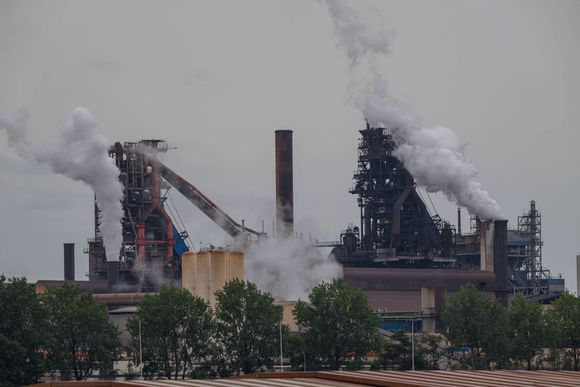
Europe’s pioneering emissions trading system, which creates a market where factory and power plant owners have to compete for a gradually dwindling pool of CO2 emissions allowances, faced a moment of reckoning this week. But opponents who were hoping for a capitulation by Brussels were disappointed as Ursula von der Leyen effectively turned the tables on the handful of EU capitals joining heavy industry in demanding the law be gutted or suspended. Governments have been channelling less than 5% of revenue into helping industry decarbonise, she told them in Antwerp. In fact, they’ve been using a whopping three-quarters to shore up wobbly national budgets. “Channelling more ETS revenues back to industry will therefore be a core focus of the upcoming reform of the Emissions Trading System this summer,” von der Leyen said. – Robert Hodgson
Defence – Interview with Latvian Defence Minister
Soft power is a great idea, but it doesn’t deliver speedy results. As the EU debates the 20th sanctions package against Russia, Andris Sprūds, Defence Minister of Latvia, bemoaned the slow progress. In an exclusive interview with Euractiv he stressed how long it takes the sanctions to effect change in Russia, which is systematically targeting Ukraine’s energy grid and its civilian population. “Sanctions will not likely immediately change the behaviour of Putin’s authoritarian regime, including in Ukraine and hybrid warfare activities,” he noted, referring to Russia’s Shadow fleet and a variety of underhand activities. – Ilana Bet-El
Health – Surgical gloves expose risks of ‘Made in Europe’
Europe’s push for ‘Made in Europe’ rules is gaining momentum – but even something as basic as a surgical glove shows how fragile that vision can be. The medtech industry warns that this everyday medical essential depends on global supply chains, from natural rubber in Southeast Asia to specialised components used across the sector. Forcing EU‑only sourcing, they argue, could raise costs and limit access to vital technologies. As Brussels talks up strategic autonomy, medtech companies counter with a different idea: shift from ‘Made in Europe’ to ‘Made with Europe’ — a model that strengthens the EU’s industrial base without cutting off the partners it still relies on. – Magdalena Kensy