Also, MFF, migration pact, Bardella
Rapporteur
Powered by

You’re reading Rapporteur on Friday 12 June. This is Nicoletta Ionta, with Eddy Wax in Brussels.

Need-to-knows:

🟢
Exclusive: Kallas compared Israeli’s conduct to apartheid

🟢 Wealthy capitals revolt over budget plans

🟢 EU migration masterplan enters into force

Powered by ACCA
Why Finance Talent Is Powering Measurable Social and Environmental Progress?

With 69% of accounting and finance professionals seeking roles that make a meaningful contribution, Europe’s finance sector is shifting from reporting to real impact. Explore ACCA’s 2026 Global Talent Trends to discover how the profession is being redefined and how purpose-driven talent is delivering measurable progress across organisations. Find out more!

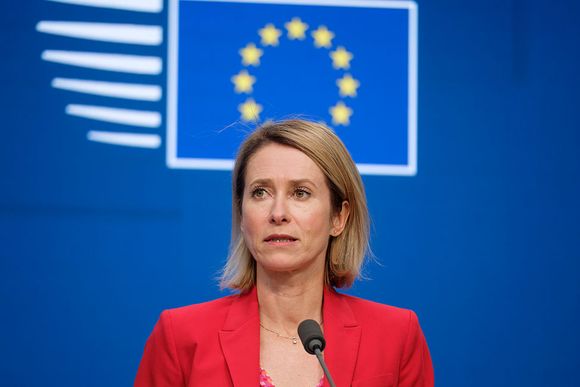
Kaja Kallas (Photo by Thierry Monasse via Getty Images)

The EU’s diplomatic arm suffered what can only be described as a near-death experience on Thursday – at least according to media reports – swinging from impending dissolution to potential reinforcement within a single news cycle.

Kaja Kallas, the EEAS chief, moved quickly on to the defensive, issuing calls for unity after reports that French officials had been exploring ways to overhaul how the bloc’s external arm is structured and operates.

Kallas has already had a politically charged tenure at the helm of the EU’s foreign service, navigating tensions with Ursula von der Leyen over visibility, taking an ultra-hawkish line on Russia and receiving flak for comments perceived as out of step with her commissioner colleagues and mainstream EU positions.

Rapporteur can reveal further comments by Kallas that are likely to intensify scrutiny of her leadership at a time of heightened institutional sensitivity.

Kallas compared Israel’s treatment of Palestinians to South Africa’s apartheid era during high-level talks in Mexico City, according to officials and diplomats who spoke to my colleagues Sarantis Michalopoulos and Magnus Lund Nielsen.

The remarks would mark a departure from the EU’s official foreign policy line.

“The EU is critical of Israel and supports a two-state solution. The comparison with apartheid is unacceptable and not EU policy. It is a big problem if she is making these kinds of statements while officially representing the EU on the world stage,” one EU diplomat said.

This also comes as Kallas struggles to secure Council support for further measures against Israel – from restricting trade with illegal West Bank settlements to sanctioning National Security Minister Itamar Ben-Gvir.

Kallas’ office was approached for comment on Monday but declined to confirm or deny the account. Read the full story.

Budget hawks unsheathe their knives

Fresh spending figures for the EU’s 2028-2034 budget have triggered an immediate backlash from net contributing countries, which argue they are being asked to bankroll an ever-growing wish list.

The Dutch finance minister dismissed the proposal as a "no-go box," while Sweden's EU affairs minister said she had expected the Cypriot presidency's plan to be "more in line with reality.” One diplomat from a net contributing country said it was "no basis for an agreement."

The draft framework foresees a "moderate" 2% cut – around €33 billion – to the Commission's €1.76 trillion proposal from last summer, my colleague Victoria Becker reports.

EU ambassadors will take up the figures on Sunday, followed by European affairs ministers on Tuesday, before leaders confront the issue at next week's European Council summit. Read the full story.

First stress test for EU migration pact

The EU’s flagship migration pact enters into force today, but doubts remain over whether some national governments are ready.

Several EU countries are struggling to meet its sweeping legal and technical requirements, with Hungary among the biggest laggards. That has raised questions over whether Brussels will need to crack down on non-compliant capitals.

Asked whether the Commission would use “sticks” to bring Hungary into line, Migration Commissioner Magnus Brunner told Rapporteur on Wednesday that the pact already contains both incentives and penalties. “There are sticks and carrots in the pact. So, you get funding, you get money, only if you apply the pact,” he said.

Péter Magyar, Hungary's prime minister, once firmly opposed to the EU migration pact, is now keeping his options open. Pressed by the opposition Fidesz to rule out implementation, he sidestepped the question, saying only that “there will be no illegal migrants in Hungary” under a Tisza government.

Brunner, however, signalled confidence in Hungary’s new leadership. “I think that the new government is very constructive,” he said. “Our job is to explain the advantages for Hungary and make them visible on a political level.”

Bardella’s EU vision

Jordan Bardella used a Brussels appearance on Thursday to sketch his nationalist vision for Europe, arguing the bloc needs a political reset rather than incremental reform.

The National Rally leader called for von der Leyen to step down, accusing her of being responsible for the "decline that European nations find themselves in today.” He also suggested that a future French government led by Marine Le Pen or himself would seek to reshape the EU from within.

Bardella further argued that France’s status as one of the bloc’s largest budget contributors should translate into greater influence in EU decision-making. Read Eddy’s full story.

A (fiscal) storm of criticism

Several EU finance ministers blasted Brussels' proposal to relax the bloc's fiscal rules during last night's Eurogroup meeting.

Speaking afterwards in Luxembourg, Valdis Dombrovskis, the EU’s economy commissioner, said ministers warned the proposed easing – designed to cushion the economic fallout from the Iran conflict – could undermine fiscal sustainability and even "crowd out" defence spending.

Germany, France, the Netherlands, Finland and Estonia were among those raising concerns, officials told my colleague Thomas Moller Nielsen. Italy and Spain backed the move.

IMF chief Kristalina Georgieva, who joined the meeting, echoed those concerns. Her message to heavily indebted governments: "Please, please, please ... be very careful not to spend money you don't have."

Swiss referendum threatens EU relations

Brussels will be watching closely as Swiss voters head to the polls this weekend for a referendum that could upend most agreements with its European neighbours.

The initiative, framed by supporters as a sustainability push, aims to curb immigration and cap Switzerland’s population at 10 million people. If approved, experts warn it could unravel parts of Bern’s wider package of agreements with Brussels and impact the roughly half a million Swiss citizens living in the EU.

Polls point to a tight race, albeit with a slight lean for the “No” camp. Read Magnus Lund Nielsen’s full story.

Here are three new stories from Euractiv:

PARIS 🇫🇷

France’s 2027 presidential election faces “serious threats” from foreign interference, PM Sébastien Lecornu warned on Thursday, saying “every candidate and every party could be targeted.” The warning follows several destabilisation campaigns linked to recent local elections. Lecornu also flagged the rise of “digital mercenarism” – cyber operations deployed not only to influence politics but also to advance private or financial interests.

– Elisa Braun

BERLIN 🇩🇪

Germany’s parliament has again clipped the wings of the defence ministry’s procurement plans, slashing a request for 900 fuel tanks after lawmakers baulked at the price. The budget committee approved only 300 units, citing a sharp increase from a comparable contract five years ago. The pushback echoes concerns elsewhere in Europe, with Romania warning some suppliers had inflated prices by 30% after the launch of the EU’s SAFE defence loan scheme. Read the full story.

Kjeld Neubert

LONDON 🇬🇧

Britain's Defence Secretary John Healey
resigned on Thursday over a row about military spending, warning that Keir Starmer's delayed Defence Investment Plan risked leaving the country "less safe." Armed Forces Minister Al Carns and Healey aide Pamela Nash also quit. Dan Jarvis, a former army officer, was appointed defence secretary, as the departures intensified pressure on Starmer ahead of a crucial by-election.

Christina Zhao

ROME 🇮🇹

Italy is preparing a sweeping overhaul of its armed forces that would expand personnel numbers by up to 40,000 by 2033 and create a new multi-layered reserve system, according to a draft bill seen by Euractiv. The reform would allow the rapid mobilisation of reservists during major crises, as Rome seeks to bolster readiness even as it reportedly weighs scaling back its SAFE loan request. Read the full story.

Pietro Guastamacchia

STOCKHOLM 🇸🇪

Sweden Democrats politician Stina Isaksson has been expelled from the far-right party after distributing multilingual leaflets urging immigrant families to “stop social services from taking your children.” The campaign, published in Swedish, Arabic, Somali and Albanian, drew criticism for echoing the 2021 LVU disinformation campaign. Isaksson apologised for the “clumsy” leaflets but denied spreading misinformation. She will retain her regional and municipal mandates as an independent until the end of the year.

Charles Szumski

SOFIA 🇧🇬

President Rumen Radev said on Thursday that Bulgaria had “already given enough” military aid to Ukraine, confirming a halt to further donations of weapons and ammunition from army stockpiles. Defence Minister Dimitar Stoyanov said exports by Bulgaria’s defence industry would continue. Since 2022, Sofia has approved 13 military support packages for Kyiv, many reimbursed through the European Peace Facility. The move comes ahead of next week’s EU summit, where support for Ukraine is expected to be discussed.

Konstantin Karadjov

NICOSIA 🇨🇾

The EU has signalled it is ready to take part in renewed Cyprus reunification talks, pushing back against calls from the Turkish-held north to keep Brussels out of the process. A European Commission spokesperson said the bloc stood ready to play an "active role", reaffirming support for reunification under a bizonal, bicommunal federation as UN-led diplomacy shows tentative signs of revival. Read the full story.

Sarantis Michalopoulos

Advertisement
ACCA

Eddy Wax Newsletter Editor
Eddy Wax
Nicoletta Ionta Politics Reporter
Nicoletta Ionta

Contributors: Victoria Becker, Magnus Lund Nielsen, Sarantis Michalopoulos, Thomas Moller Nielsen, Mátyás Varga, Elisa Braun

Editors: Christina Zhao, Sofia Mandilara, Charles Szumski

Euractiv
Euractiv Media BV - Boulevard Charlemagne 1, Brussels 1041 - Belgium
Copyright © 2026. All rights reserved.