After eight years of diplomatic frost, European Parliament lawmakers are returning to China – not expecting agreement, but to better understand how it works.
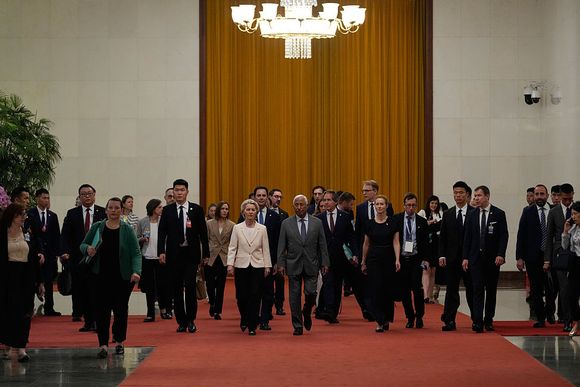
A delegation of MEPs arrived this week for the first official visit since 2018, reopening a channel that collapsed under the pandemic and Beijing’s sanctions on European lawmakers in 2021. More trips are already planned throughout the year, signalling a steady, if cautious, resumption of contact.
Beijing is already shaping the narrative. Chinese officials and state media, including Global Times, have framed the visit as an opportunity for European lawmakers to gain “firsthand exposure” to Beijing’s economic model and technological development, arguing that “enhanced understanding” could move them beyond “entrenched biases.”
Coverage in Guancha went further, calling it a “quiet victory” for Chinese diplomacy.
The nine-member group, led by Internal Market Committee chair Anna Cavazzini, has held talks with Chinese officials, pressing them over a surge of unsafe and non-compliant products entering the EU.
More than 5.8 billion low-value parcels entered the bloc last year, over 90% from China. The delegation is due later this week to meet executives from Shein, Alibaba and Temu.
Cavazzini cast the visit in protective terms, warning that the EU’s internal market cannot be “overflooded” with dumped goods and insisting Chinese platforms meet European standards. The message is clear: engagement does not mean concession.
Understanding, in this relationship, is a form of leverage. After years of friction with the European Commission, Beijing has in recent months shifted its lobbying efforts towards Parliament, where EU laws are shaped, amended and, at times, softened.
For some in Strasbourg, the logic resonates. Renew MEP Engin Eroglu, who chairs the European Parliament’s China delegation, has argued policymakers need to “step out of our EU bubble” and see China up close.
None of this signals a thaw. Parliament remains one of the EU’s most hawkish institutions on China, and several MEPs are still under Chinese sanctions. Even as contacts resume, the economic relationship is hardening.
German Chancellor Friedrich Merz floated the idea of a future trade deal last week, only for Brussels to swiftly shut it down, insisting Beijing must first address "distortive market practices."
Still, the visits will continue.
If they are unlikely to resolve the structural tensions between Brussels and Beijing, they point to something both sides still share. For all their political differences, the EU and China are, in different ways, knowledge-first systems – treating learning not as an abstract virtue, but as a tool of power.
|

_20260204092816.png)