Also, leaked Commission call, ASEAN, Leggeri probe, Costa vs Russia
Rapporteur
Powered by

You’re reading Rapporteur on Wednesday 25 March. This is Eddy Wax, joined by Nicoletta Ionta in Brussels.

Need-to-knows:

🟢 Frederiksen wins but disappoints

🟢 Mystery surrounds leaked phone call involving top EU aide

🟢 Former Frontex chief faces criminal probe

Powered by Amazon
Businesses across Europe grow with the AWS Cloud

xFarm uses the AWS Cloud to support the digital evolution of farming. Its platform helps farmers improve productivity, make data-driven decisions, and keep sustainability at the core of their operations while supporting innovation across Europe. Find out more.

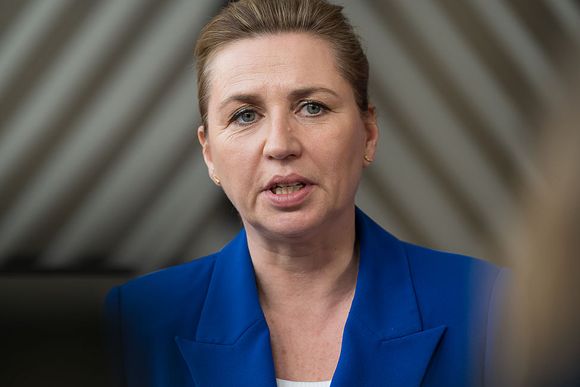
Danish Prime Minister Mette Frederiksen (Photo by Jonathan Raa/NurPhoto via Getty Images)

Mette Frederiksen has scored a weaker-than-expected victory in Denmark’s election, with her Social Democrats losing a dozen seats and emerging without obvious governing partners.

Frederiksen called the snap vote a month ago in the hope her defence of Greenland against pressure from Donald Trump would help secure another four-year term. That she is still likely to remain prime minister says more about the fragmented political landscape than it does about her own popularity.

The Social Democrats won just 21.9% of the vote. The Green-Left secured 11.6%, while ten other parties were on 10% or lower.

Greenland barely featured in the campaign. Voters instead focused on other concerns, from drinking water quality to piglet welfare and even the cocaine habit of one party leader – and Frederiksen pivoted perhaps too late from the big sweep of geopolitics to a more left-wing, domestic agenda. Her two coalition partners, the centrist Moderates and right-wing liberal Venstre, also lost support.

“I’m obviously disappointed that we’ve lost ground. But I think it’s an okay result,” Frederiksen said last night. “Taking responsibility takes its toll,” she added.

If anyone benefited from a Greenlandic dividend, it’s the pipe-smoking Foreign Minister Lars Løkke Rasmussen. Despite his Moderates also losing seats, he has emerged as a potential kingmaker, with influence over whether Frederiksen chooses to govern with parties on the left or right. “Come and play with us,” he told Frederiksen and Venstre last night.

Venstre ruled out returning to government with Frederiksen, raising the likelihood of a left-leaning coalition similar to the one she first governed with in 2019-2022.

Magnus Lund Nielsen, our resident Dane, told me from Copenhagen on election night that it’s possible Rasmussen will drive a hard bargain, potentially seeking senior economic portfolios in exchange for supporting a left-leaning coalition. Negotiations could take weeks, or even months.

Strong gains for the far right (with the Danish People’s Party making the biggest gains in seats) challenge Frederiksen’s hardline migration strategy. The results make Denmark look like the Netherlands’ fractured parliamentary landscape – on steroids. The left-wing bloc is larger than the right-wing one, but neither commands a majority.

“We need a centrist government with a blue [right-wing] political foundation. And if that is not possible, then we’ll take some time in opposition to regroup,” Venstre MEP Morten Løkkegaard said.

In power since 2019, Frederiksen is in the club of Europe’s longest-serving leaders, alongside Emmanuel Macron, Viktor Orbán, Andrej Plenković and Pedro Sánchez.

Yet the result marks the party’s worst performance in a century. What’s most important, however, is holding onto power, one Social Democrats strategist admitted last night.

At least she’s not alone. Frederiksen is the second EU leader this week to emerge weakened from a risky election.

Read Magnus’ full report.

Mystery leaked phone call spooks Brussels

A phone call between a close aide to Ursula von der Leyen and a Brussels-based Politico journalist turned up on YouTube this month, racking up over 5,000 views and sending a shiver through the EU diplomatic world.

Publicly available data show that under two hours after being posted on YouTube by a new anonymous account, Hungarian media outlets close to Viktor Orbán’s government, such as Index, seized on it, focusing their reporting on the parts of the call about the Druzhba Russian oil pipeline in Ukraine. Alice Stollmeyer, from the Dutch NGO Defend Democracy, suggested the timing suggested the Hungarian media outlets had prior knowledge.

The apparently intercepted call, which took place in early March, was uncontroversial, revealing no secrets. But its appearance online, and in Hungarian media and Hungarian-language Slovak media, has fed rumours over the activities of foreign intelligence services, especially those of Russia or Hungary.

The Commission immediately replaced the aide’s phone as per cybersecurity protocol and a full investigation was carried out. Rapporteur understands that an investigation of the device by the Commission’s security department found “nothing on the phone” with no evidence of hacking or spyware, such as Pegasus.

One possibility is that the conversation might have been intercepted via physical radio surveillance but the expense and effort of such an operation seems unlikely – especially for such slim results.

According to sources, a similar investigation by Politico found the journalist's device was also clean. The Belgian secret service is also carrying out a probe into the affair, which is set to enter into Brussels’ folklore. Politico declined to comment.

AWOL in ASEAN

Brussels is failing to build sufficient diplomatic and commercial ties with Southeast Asia, an EU business group has warned.

Chris Humphrey, executive director of the EU-ASEAN Business Council, told Euractiv that the EU’s absence from ASEAN ministerial meetings contrasts with a push by Washington, Beijing, and Moscow to deepen political and economic links with the 11-country bloc.

“We're not turning up at the ministerial meetings when others are turning up, and it gets noticed and gets commented on,” he said. Humphrey cited a January meeting of ASEAN digital ministers in Vietnam, attended by senior US, Chinese and Russian representatives – but not Brussels. Read Thomas Møller-Nielsen’s story.

Frontex ex-chief faces French probe

French prosecutors have opened a preliminary investigation into Fabrice Leggeri, former head of the EU border agency Frontex, following a complaint by the rights group Ligue des Droits de l’Homme alleging complicity in crimes against humanity and torture.

Leggeri, now a far-right MEP with the Patriots group, resigned from Frontex in 2022. The complaint accuses him of encouraging the interception of migrant boats by Greek and Libyan coastguards.

The case will be handled by a specialist unit of the Paris Judicial Court, with an investigating judge yet to be appointed, one LDH lawyer told Euractiv. Only then will the allegations be formally examined.

Leggeri’s office declined comment, while Patriots leader Jordan Bardella voiced “full support to Leggeri,” calling border enforcement “a fundamental right.”

Commission calendar hits oil slick

The European Commission has removed the publication date of its long-awaited proposal to ban Russian oil imports from its provisional agenda on Tuesday, though officials told reporters it still intends to present the measure. Read Stefano Porciello’s full story.

EU chief vs Russian influencer: António Costa batted away a question from a student expressing pro-Russia views at the Sciences Po university in Paris on Tuesday. The student accused the EU of failing to pursue meaningful diplomacy with Moscow and of acting “as if nearly half of the European continent is not Europe.” Costa replied that Russia’s full-scale invasion of Ukraine showed it had no interest in diplomacy. “Europe tried to have a good relationship with Russia for a long time,” he said. Full report here.

BERLIN 🇩🇪

Germany is drafting legislation to criminalise pornographic deepfakes as part of efforts to tackle digital abuse. Justice Minister Stefanie Hubig is expected to submit a bill for internal government review as early as this week, Handelsblatt reports. The move follows allegations by television presenter and actress Collien Fernandes that her former husband, actor Christian Ulmen, created and distributed deepfake pornography of her. Ulmen denies the claims.

Victoria Becker

STOCKHOLM 🇸🇪

Swedish police have set up a security search zone around the US and Israeli embassies in Stockholm following a rise in threats linked to the Middle East conflict. The measure, covering parts of the Diplomatstaden district, allows officers to conduct searches without specific suspicion. Authorities cited past incidents and warned of risks of violence by individuals acting on behalf of foreign actors. The zone will remain in place until 7 April.

Charles Szumski

ROME 🇮🇹

Giorgia Meloni urged Tourism Minister Daniela Santanchè to resign after she was placed under investigation for alleged financial report falsification at a publishing company she formerly ran. The appeal followed Deputy Justice Minister Andrea Delmastro’s resignation over links to a mafia-linked convict. The departures came days after voters rejected Meloni-backed justice reforms, deepening political pressure on her government after the referendum defeat on Tuesday.

Christina Zhao

MADRID 🇪🇸

Pedro Marco, head of Spain’s rail infrastructure operator ADIF, on Tuesday rejected as “slander” reports the company sought to obstruct the investigation into January’s Córdoba train crash, which killed 46 people. Speaking in parliament, he denied tampering with technical reports or removing track sections at the site. Marco pledged full cooperation with authorities and said ADIF was “not worried” about a separate EU prosecutors’ fraud probe.

Inés Fernández-Pontes

WARSAW 🇵🇱

The EU Court of Justice ruled on Tuesday that the role of Poland’s post-2017 judicial council (KRS) in appointing judges does not, in itself, justify their exclusion from cases. The decision followed questions from a Poznań court over judicial independence. While reiterating concerns about the KRS, the court said national judges must assess impartiality case by case and urged Warsaw to establish a framework to review contested appointments.

Charles Szumski

BRATISLAVA 🇸🇰

The Commission warned it could take legal action against Slovakia over measures charging foreign drivers more for diesel, calling them “highly discriminatory” and contrary to EU law. Bratislava introduced the 30-day scheme after a Druzhba pipeline halt and the Middle East war. Robert Fico said he did not expect infringement proceedings. Brussels previously launched similar action against Hungary over dual pricing.

– Natália Silenská

KYIV 🇺🇦

Russia launched one of its largest drone assaults on Ukraine, firing nearly 1,000 drones within 24 hours, killing multiple people and striking the UNESCO-listed centre of Lviv, officials said. Daytime attacks killed civilians in Ivano-Frankivsk and the Vinnytsia region, while overnight strikes hit housing and infrastructure nationwide. Volodymyr Zelensky condemned the barrage as “absolute depravity,” pledging Ukraine would respond.

– Christina Zhao
Advertisement
Amazon

European security officials are growing increasingly wary that networks linked to Iran’s “axis of resistance” may already be probing targets across the continent, despite Friedrich Merz’s insistence that there is no evidence of a major threat.

A string of improvised attacks claimed by a previously unknown group, and circulated via channels affiliated with Hezbollah, has sharpened concerns about decentralised recruitment tactics and the potential expansion of Tehran-aligned proxy coordination in Europe.

author_name Newsletter Editor
Eddy Wax
author_name Politics Reporter
Nicoletta Ionta

Contributors: Magnus Lund Nielsen, Bruno Waterfield, Thomas Møller-Nielsen, Stefano Porciello

Editors: Christina Zhao, Sofia Mandilara, Charles Szumski

Euractiv
Euractiv Media BV - Boulevard Charlemagne 1, Brussels 1041 - Belgium
Copyright © 2026. All rights reserved.