Mogherini defiant, Sannino out, S&D’s Qatargate, Hamas files, Belgium vs Germany, Venezuela migration, new EPPO chief
Rapporteur
Powered by

Welcome to Thursday's Rapporteur. This is Eddy Wax in Berlin, with Nicoletta Ionta in Brussels.

Send us your tip-offs, documents and story ideas at eddy.wax@euractiv.com and nicoletta.ionta@euractiv.com

Need-to-knows:

🟢  Federica Mogherini stays put, while Stefano Sannino will quit early

🟢  Belgium clashes with the Commission after 'reparations loan' proposal

🟢 A right-to-far-right majority wins two key migration votes in Parliament

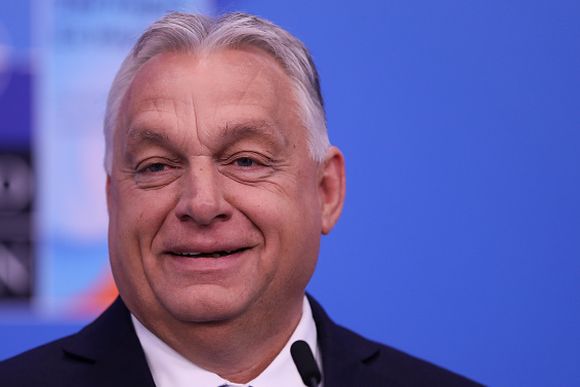
Viktor Orban (Photo by Klaudia Radecka via Getty Images)

Federica Mogherini just handed Viktor Orbán a stick of electoral dynamite.

With only months before Hungary holds an election widely seen as existential for Ukraine’s EU ambitions, his government is pouncing on the corruption scandal engulfing the EEAS and the College of Europe – two bastions of the EU establishment.

Orbán was hardly short of material. “EEAS-gate,” as we
dubbed it, comes hot on the heels of Qatargate, Huawei-gate, and the charges filed against Didier Reynders, the former justice commissioner who regularly lectured Hungary on the rule of law. Those scandals have touched figures from all three of the mainstream political families: socialists, liberals, and conservatives.

For Orbán, it proves everything he’s ever said about Brussels elites who hammer him for his Russia-friendly populism. But the timing of a scandal, touching the EU's foreign policy establishment, so close to Hungary’s election may yet prove useful for Orbán’s Fidesz, which has been trailing for months in the polls to Péter Magyar’s Tisza.

“It’s not just dysfunctional but a corrupt organisation,” his senior adviser Balázs Orbán – no relation – told me under the Christmas tree in the foyer of the swanky Corinthia Hotel in Brussels. He argued the EEAS should be disbanded and reduced to a technocratic body that coordinates foreign policy positions without political influence.

“These are just signs of Brussels leadership failing,” said Orbán, who will lead the ruling party’s campaign in the run-up to the election next spring, casting the EU establishment firmly as the enemy.

Critics would say the corruption charges are rich coming from Budapest. Marie Bjerre, Denmark’s Europe minister, recently
described Hungary as the “most corrupt country in the EU.” Bjerre is just “echoing the Brussels bubble’s opinion and at the same time we have scandals like this,” Orbán said.

At the EEAS, Kaja Kallas is trying to steady the institution, telling staff in an
all-hands email that the service will cooperate fully with authorities and promising transparency, including a Q&A with diplomats.

At the Commission, however, the crisis comms (read: stonewalling) aren’t going well. Stefano Sannino – the DG MENA chief now a
suspect – told staff in an internal email, scooped by Sofía Sánchez Manzanaro and Nicoletta, that he would step down at the end of the year. It was the first major scalp of the scandal, and an unusual way for a director-general to exit.

“I have decided to step back and retire at the end of the month,” he told his colleagues, saying it was no longer “appropriate to continue in my current position.”

Yet the Commission’s official line, given to my colleague Sarantis Michalopoulos, contradicted this. Sannino was due to retire “as planned” at the end of December and would take leave until then “in light of allegations” from prosecutors, a spokesperson said. Well, which version is true?

As for Mogherini – also now a suspect – her five-line statement last night was notably terse, making no mention of
her own position. Crisis meetings will take place today at the College as outrage, speculation, and memes ricochet through the student and alumni community.

Also enjoying the ride: the far right.

Powered by Wilfried Martens Centre for European Studies
Wilfried Martens Centre Newsletter
The European Ideas Forum (EIF) is back!

Join us on December 9 & 10 at the Renaissance Hotel in Brussels, as we debate the pressing challenges ahead and explore the innovative solutions driving the EU’s next chapter.
Register
today to secure your seat!

Venezuela majority wins migration votes

Parliament’s Civil Liberties Committee pushed through two contentious migration files – the new safe country of origin list and the revamped safe third country rules – after the EPP aligned with further right groups, including ECR, Patriots for Europe, and Europe of Sovereign Nations, delivering a win for the so-called “
Venezuela” alliance, stretching from the centre right to the far right.

“Today we reached an important turning point on repatriation… made possible by the centre-right majority, strengthened by Renew’s abstention,” ECR leader Nicola Procaccini said. The centre-left denounced the move. Socialist shadow rapporteur Cecilia Strada warned the overhaul “creates a system for trading people,” enabling expulsions based on transit alone or under informal deals with countries like Libya or Tunisia.

Left MEP Damien Carême said the proposals were “a direct and deplorable response to Giorgia Meloni’s desire to implement her outsourcing agreement with Albania.” Home affairs ministers will aim to hammer out a deal among themselves next week.

Exclusive: Hamas files reveal NGO ties

Hamas documents, declassified by the Israel Defence Forces and seen by
Euractiv, show the terror group embedding trusted “guarantors” inside EU-funded NGOs to monitor projects and, in some cases, attempt to steer aid towards military objectives.

The funding raises pressure on Brussels to enforce vetting rules, with German MEP Niclas Herbst warning that non-compliant NGOs should lose EU funding.

Why did S&D let Qatargate MEP back in?

Questions are mounting over why the Socialists & Democrats reinstated an MEP they knew was under scrutiny in the Qatargate probe. On Wednesday, MEPs
voted to lift the immunity of Italian PD lawmaker Alessandra Moretti, whom prosecutors want to question about her alleged role in a “quadrumvirate” linked to Pier Antonio Panzeri and accused of taking direction from Qatar and Morocco. She denies wrongdoing.

S&D suspended her in March on her request after Belgian authorities signalled interest in questioning her, stressing the group's “zero tolerance” for corruption. Yet she was
quietly readmitted in July. Did the group expect to secure a deal to protect her immunity? As it happened, a request to lift the immunity of S&D MEP Elisabetta Gualmini was rejected. Parliament’s plenary still needs to issue a final ruling on both cases.

EU picks Ritter for top prosecutor

MEPs have endorsed Germany’s Andrés Ritter to succeed Romania’s Laura Codruța Kövesi at the helm of the European Public Prosecutor’s Office next year, handing him a docket packed with some of Brussels’ most sensitive investigations, my colleague Elisa Braun
reports. His appointment lands amid a push to bolster the bloc’s anti-fraud machinery, which could give the EPPO expanded investigative powers ahead of the next long-term budget cycle.

Guess what? De Wever hasn’t changed his mind

Belgium has flatly rejected the Commission’s claim that it has addressed its concerns over the
proposed “reparations loan,” to be financed by immobilised Russian assets, according to Magnus Lund Nielsen.

Belgian Foreign Minister Maxime Prévot said Ursula von der Leyen’s €90 billion package for Ukraine, unveiled Wednesday, still lacks “unconditional” liquidity guarantees and adequate burden-sharing, leaving the Belgian clearing house Euroclear exposed if losses occur. While the €90 billion is what the Commission has decided to earmark for the next two years, the proposed loan instrument could go up to €165 billion.

Belgium continues to push the Commission’s alternative –
joint EU borrowing backed by the EU budget – but that’s a non-starter for countries like Germany, Slovakia and Hungary. Friedrich Merz argued in the FAZ on Wednesday that the EU “cannot leave it to non-European states to decide what happens to the financial resources of an aggressor state.”

EU finance ministers will revisit the contentious issue on Friday, ahead of a European Council showdown on 18 December.

Kyiv blocks MEP visit

Ukraine has pulled the plug on a planned visit by a European Parliament security and defence delegation after learning it included Hans Neuhoff, an AfD MEP known for pro-Kremlin positions and several trips to Russia, my colleague Thomas Mangin was
first to report.

The government called off this week’s programme, including access to sensitive military sites, once his participation was confirmed.

Bazooka on the horizon

Stéphane Séjourné, the EU’s industry commissioner,
told Rapporteur on Wednesday that Brussels may have to reach for its never-used anti-coercion instrument if China’s curbs on key minerals continue to choke European production.

A new “RESourceEU” plan seeks to accelerate diversification and build a stockpiling hub modelled on Japan’s JOGMEC. “If this doesn’t work, and in one or two years we find ourselves with value chains that close down from a lack of Chinese sourcing – because we’ve not diversified quickly and we’re still too dependent – we will probably have to use the anti-coercion instrument,” Séjourné said.

More money please!

Parliament is preparing to call for a €169 billion increase in the EU’s next seven-year budget, according to a draft interim report on the MFF
seen by our Budget Brief colleague Jacob Wulff Wold.

Crackdown on energy drinks?

MEPs signalled fresh appetite for EU-level curbs on energy drinks for minors, warning that voluntary industry pledges fall short as consumption among teenagers rises. At a hearing held by the ENVI Committee, lawmakers and clinicians suggested tougher marketing rules and targeted restrictions, while industry groups defended self-regulation and cited EFSA findings on ingredient safety, my colleague Magdalena Kensy
reports.

STOCKHOLM 🇸🇪

Sweden’s government is facing scrutiny after
Dagens Nyheter reported on Wednesday that SEK 5 million (€440,000) routed through the Justice Ministry to support forced returns to Somalia may have been paid to three “ghost employees” with close ties to the country's leadership. Neither the Migration Agency nor the ministry can confirm who the individuals are. The payments formed part of a secret 2023 arrangement that redirected SEK 100 million (€8.8 million) in aid to Somalia in exchange for accepting deportees – a deal that is now drawing complaints and prompting corruption warnings.

– Charles Szumski

ROME 🇮🇹

The European Central Bank has rebuffed an amendment inserted by Italy’s ruling Fratelli d’Italia into the draft budget, asserting that the Bank of Italy’s gold reserves “belong to the State in the name of the Italian people.” In a formal
opinion to the Economy Ministry, the ECB said the intent of the provision was unclear and urged its removal, underscoring that the management of eurozone gold reserves falls under its exclusive competence. The move, a symbolic nod to a long-running anti-euro rhetoric, is now expected to be shelved to avoid a fresh clash with Brussels.

Alessia Peretti

MADRID 🇪🇸

Spain and Morocco will hold their 13th high-level meeting in Madrid on Thursday, with Pedro Sánchez hosting his counterpart Aziz Akhannouch for a closed-door summit. Sánchez’s office said the talks come at a “particularly positive moment” in bilateral relations, with agreements due to be signed on energy, agriculture and fisheries, sport, education, and counter-extremism. Ministers from far-left coalition partner Sumar will
boycott the meeting, leaving only socialist ministers – covering energy, foreign affairs, transport, education and agriculture – to accompany Sánchez.

Inés Fernández-Pontes

WARSAW 🇵🇱

Poland’s Supreme Court has adopted a resolution asserting that the country has not ceded authority to EU institutions or European courts to determine how its judiciary is organised or to validate legislation in this area – a move that could have far-reaching implications for the legal order. The intervention comes against the backdrop of Warsaw’s long-running clash with the European Commission over judicial independence during the conservative PiS government's 2015-23 tenure, when both the Commission and the EU’s top court questioned whether Poland’s judiciary remained fully independent.

Aleksandra Krzysztoszek

BRATISLAVA 🇸🇰

Robert Fico stopped short of confirming that his government will join Hungary in challenging the EU’s plan to phase out Russian gas imports by 2027, despite Budapest’s claim that a joint lawsuit at the EU Court of Justice is underway. Fico said only that Bratislava has “sufficient grounds” to sue, arguing the measure “harms Slovakia and the whole EU." Economy Minister Denisa Saková
stressed that Slovakia’s priority is to secure alternative gas supplies rather than enter immediate legal action.

Natália Silenská

BUCHAREST 🇷🇴

Romanian Navy divers have destroyed a drifting maritime drone in the Black Sea, 36 nautical miles east of Constanța, the defence ministry said on Wednesday. Acting at the request of the coast guard, the team located the unmanned surface vessel and carried out a controlled detonation. Since Russia’s invasion of Ukraine, Romanian naval forces have overseen safe passage for more than
12,000 commercial vessels transiting the area. Separately, about 150 drifting naval mines have been neutralised in the Black Sea – seven by Romania, which currently leads the multinational MCM Black Sea Task Group alongside Bulgaria and Turkey.

Charles Szumski

BUDAPEST 🇭🇺

The presidents of the Visegrad Group – Czechia, Slovakia, Poland, and Hungary – met in Hungary on Wednesday in a rare display of regional dialogue amid deep political divisions. The four countries remain sharply split over Russia and the war in Ukraine, with Slovakia and Hungary adopting markedly more Moscow-friendly positions. Talks also covered the EU agenda, including competitiveness and climate policy. Despite their differences, the leaders underscored the value of keeping the V4 format intact, arguing that sustained communication within Central Europe remains essential.

Aneta Zachová

Brussels is set to sign off on a one-year delay to the EU’s flagship deforestation law on Thursday, with negotiators preparing to reopen the file yet again after warnings that technical snags could derail its rollout.

What was meant to be a smooth implementation has instead exposed deep political rifts: centre-right MEPs have aligned with far-right groups to force a pre-emptive review of the rules. The only unresolved wrinkle – whether to exempt printed products like books and newspapers – is unlikely to stand in the way of a swift deal.

author_name Newsletter Editor
Eddy Wax
author_name Politics Reporter
Nicoletta Ionta

Contributors: Elisa Braun, Magnus Lund Nielsen, Chris Powers, Sofía Sánchez Manzanaro, Thomas Mangin

Editors: Christina Zhao

Euractiv
Subscribe
Euractiv Media BV - Boulevard Charlemagne 1, Brussels 1041 - Belgium
Copyright © 2025. All rights reserved.